Designing and building this food garden for a private school in London was a deeply rewarding project.
The brief asked for more than a productive plot. The school wanted a space that could be shared with the wider community: children from local state schools, pupils with special educational needs, and families from the surrounding area.
It needed to feel welcoming, nurturing, and rooted in the simple pleasure of growing food close to nature.
My intention was to create a garden that could teach, inspire and support. A place where people of all ages and abilities could garden side by side.
A space that would grow both food and confidence
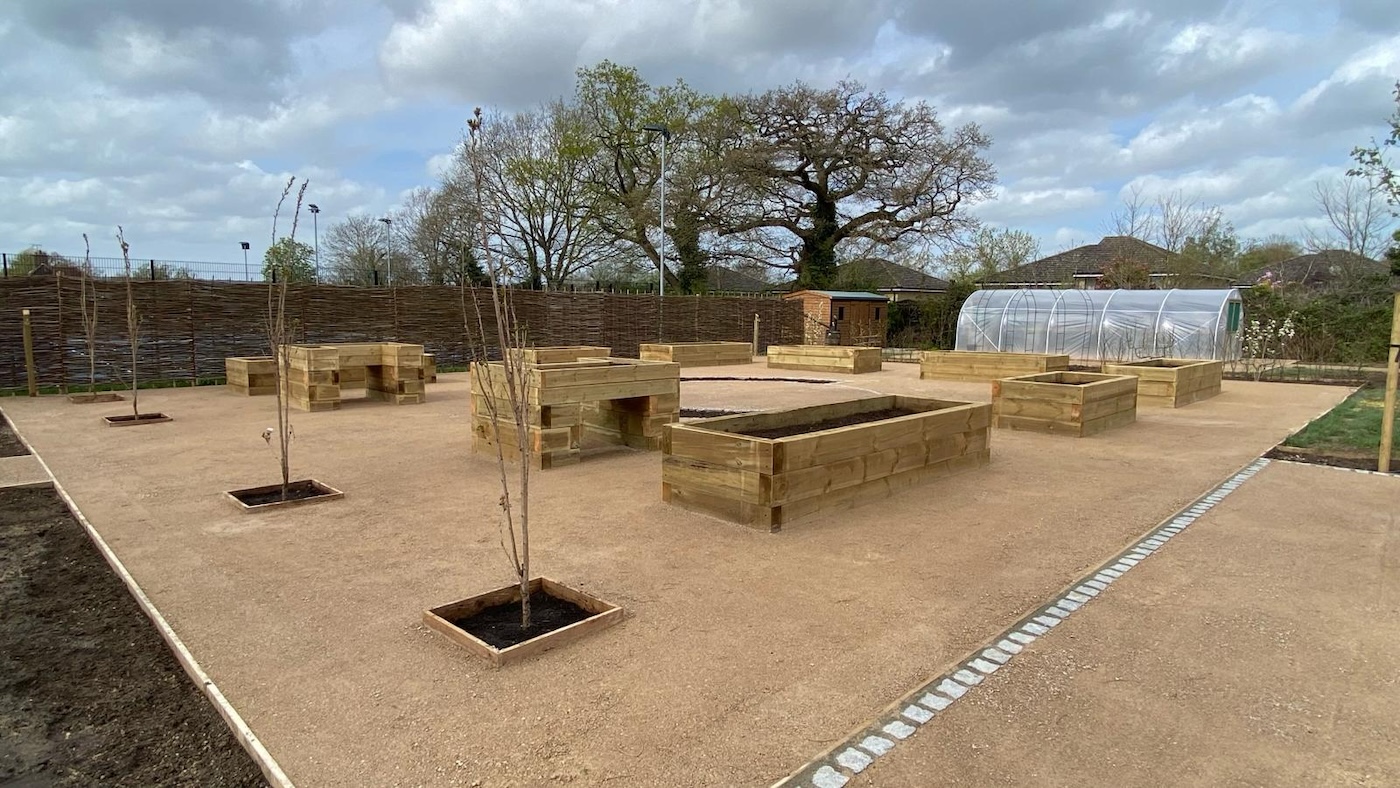
How the Garden Was Designed
The layout was kept clear, calm and easy to navigate, so important in a shared learning space.
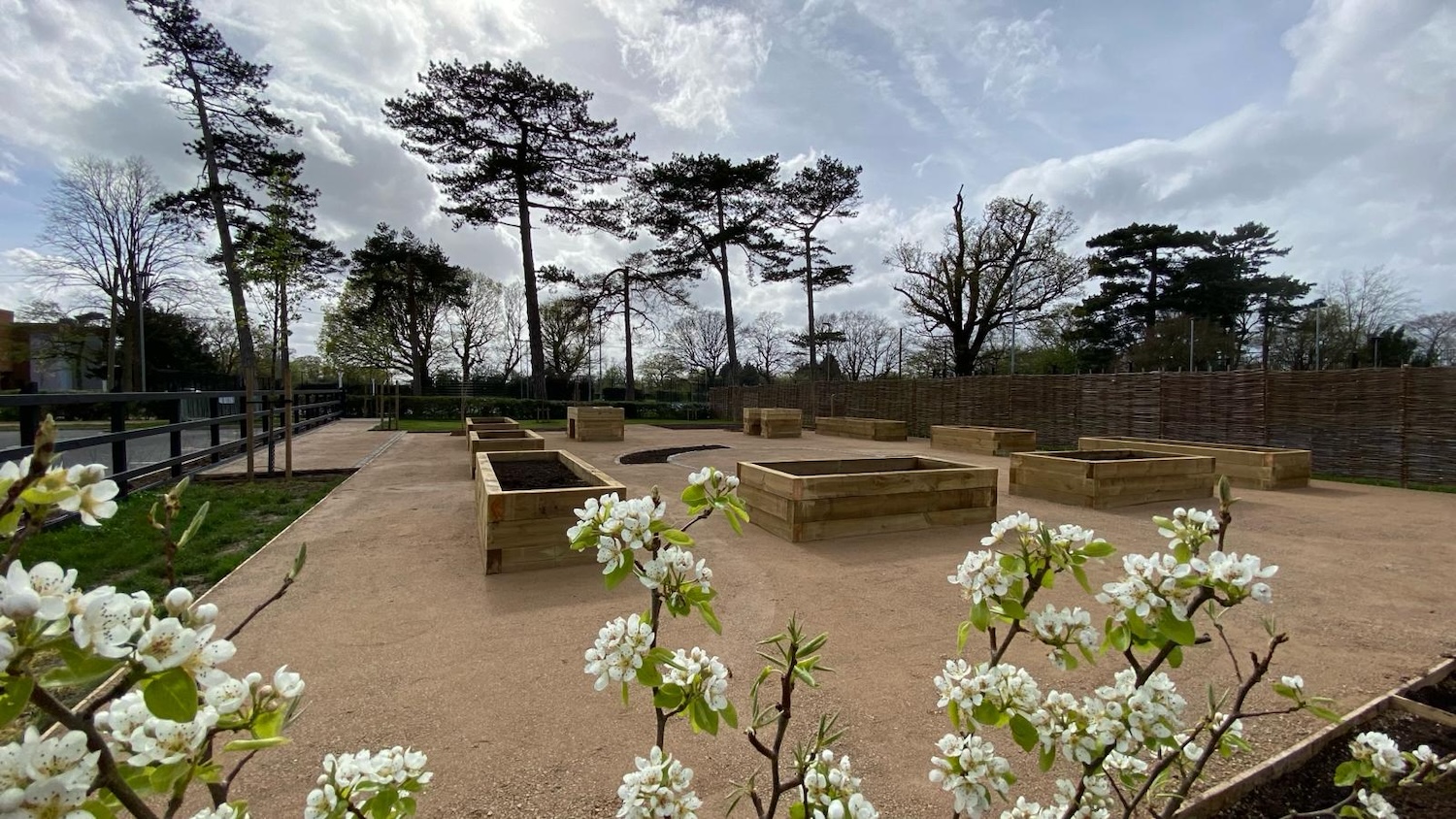
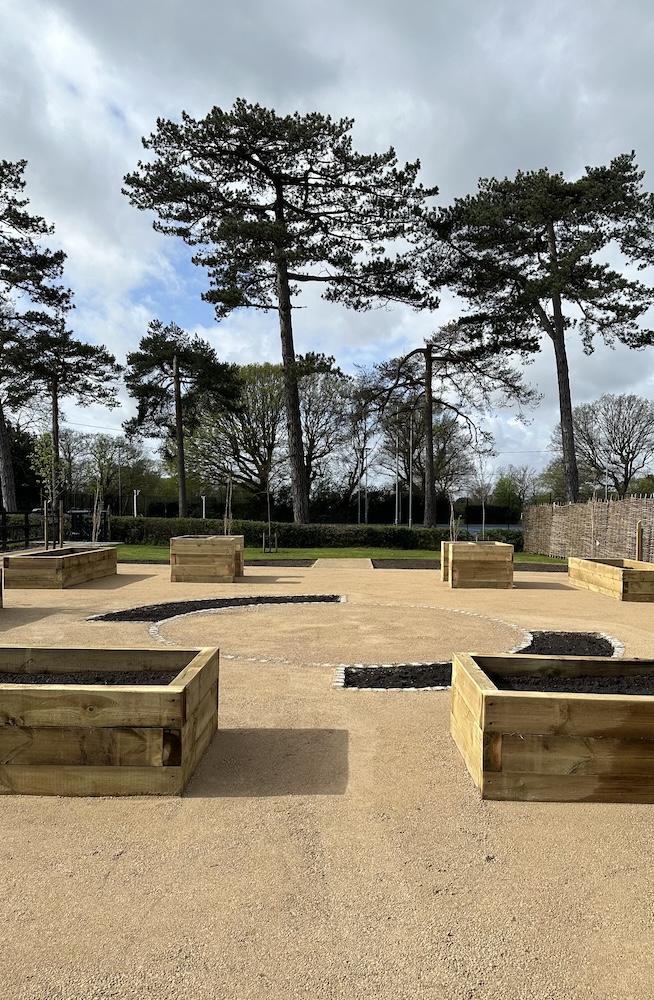
Raised beds form a gentle pattern of structure and rhythm, guiding groups naturally through the garden. Wide gravel paths ensure smooth circulation and excellent accessibility. The firm surface is ideal for wheelchair users and for anyone who benefits from stable, even ground.
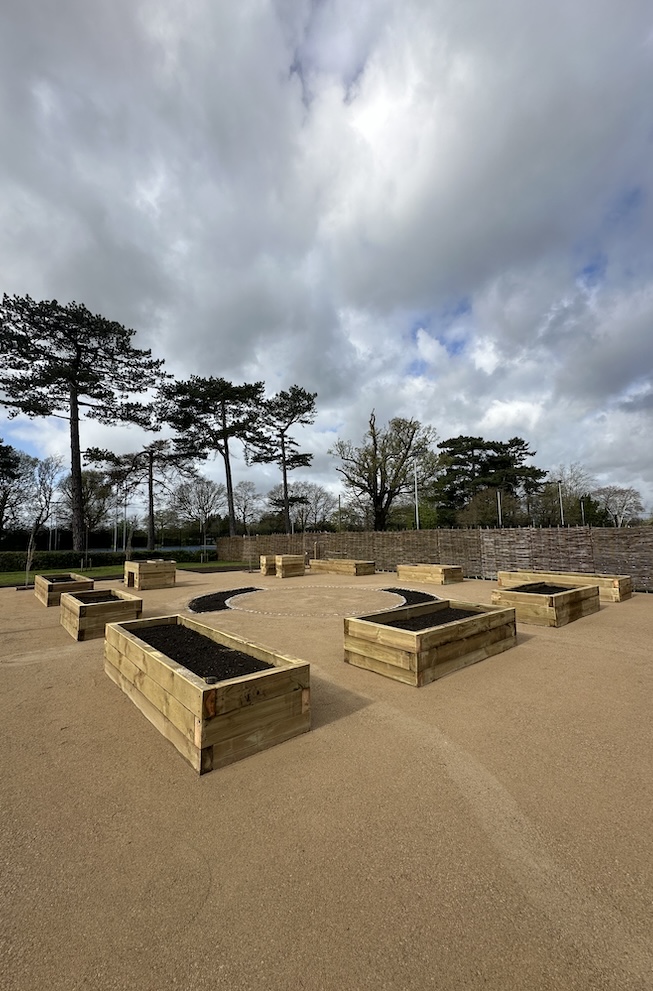
At the heart of the design is a circular teaching area. This open clearing gives classes a natural place to gather, listen and learn.
It acts as an outdoor classroom in all seasons, and it lends the garden a pleasing sense of balance and focus.
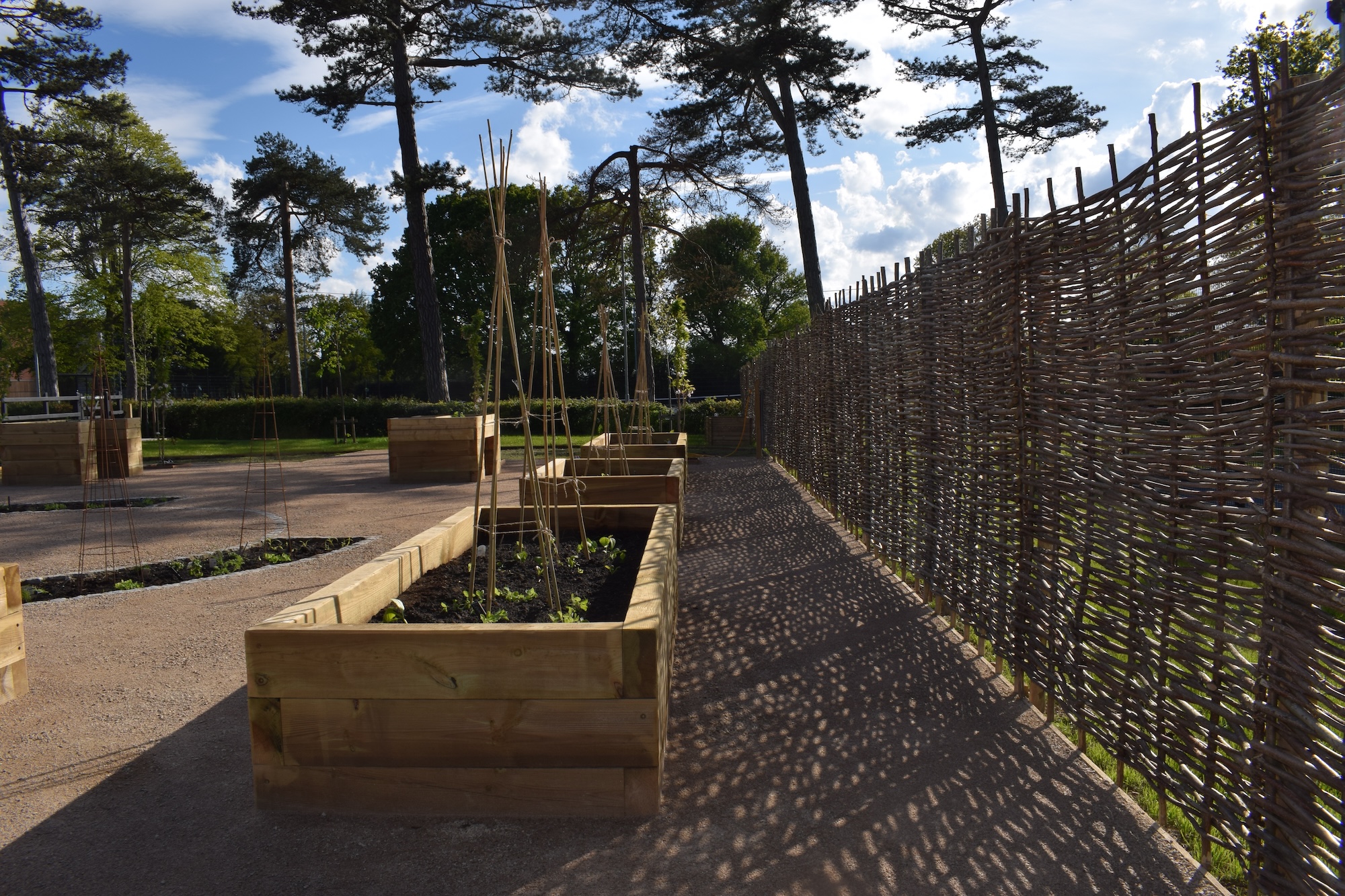
Beds Designed for Accessibility
A cornerstone of the project was the inclusion of fully wheelchair-accessible beds. These are built at a comfortable working height, with generous knee and foot space underneath. Pupils with limited mobility can garden independently, an experience that often sparks pride, ownership and joy.
Crucially, the accessible beds sit comfortably within the wider layout so that everyone, regardless of mobility, shares the same gardening experience
Trees and Wildflowers: Creating a Living Landscape
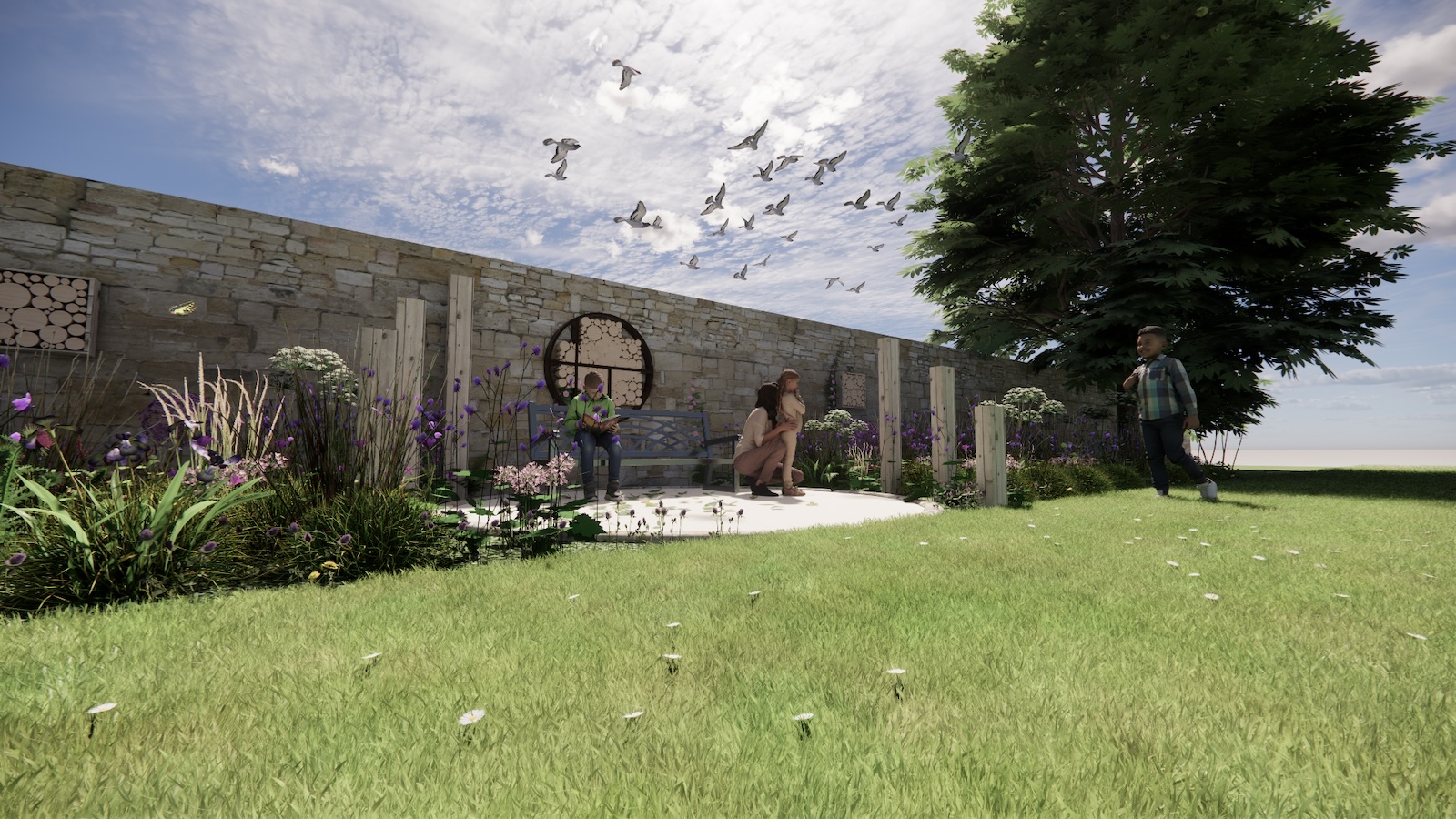
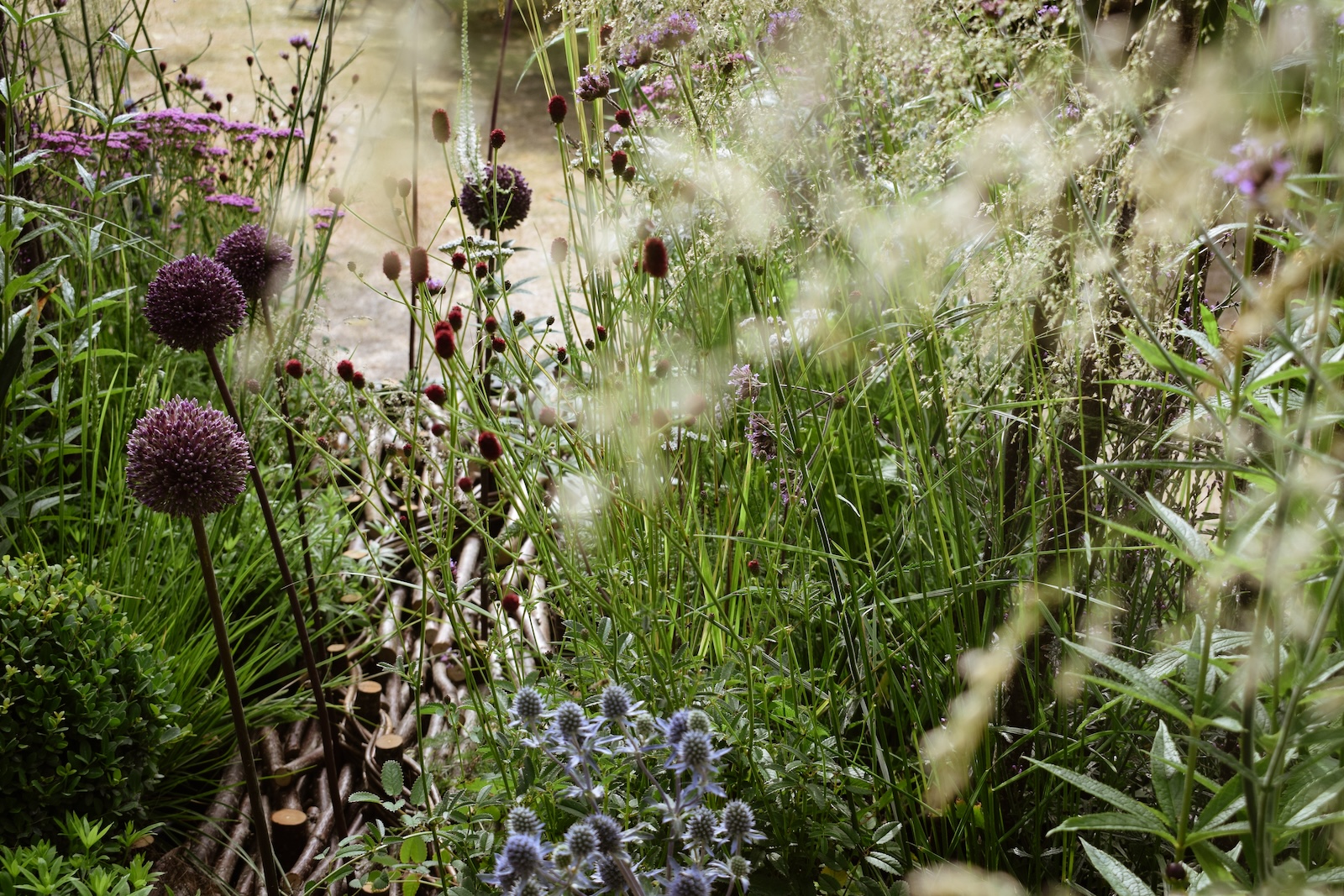
Alongside the productive beds, a wildflower meadow was introduced to bring colour, movement and life throughout the warmer months. The hum of bees and the drift of flowers create a wonderfully alive backdrop, supporting pollinators and enriching biodiversity. Teachers use the meadow to illustrate ecology, plant life cycles and seasonal change—nature’s lessons written in bright petals.
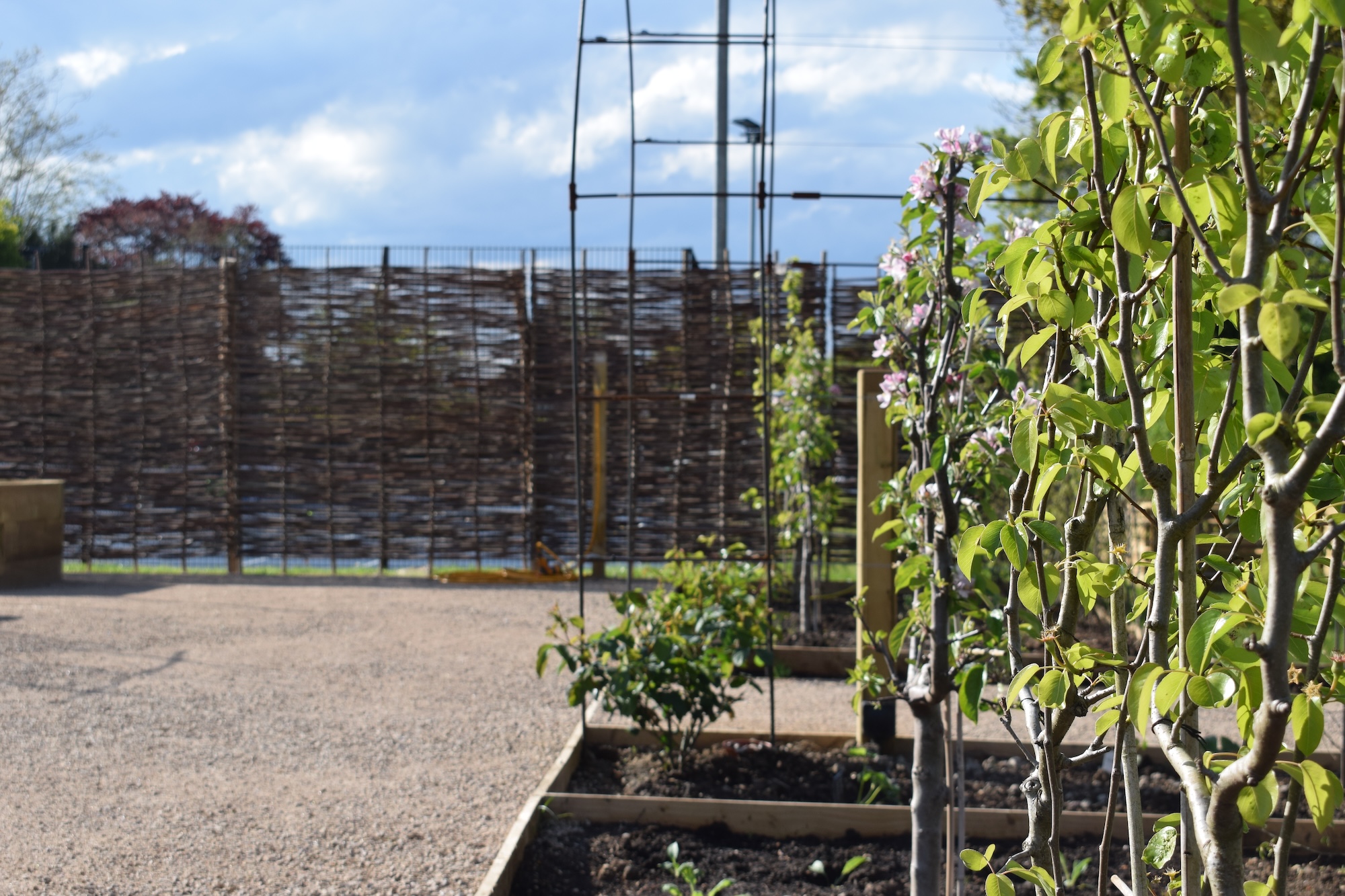
A small collection of native trees frames the site. These will mature into a soft green boundary, offering dappled shade, structure and valuable habitats for wildlife. As the seasons roll on, their changing forms help children read the landscape and understand the rhythm of the natural world.
A Polytunnel for All-Weather Gardening
To extend the growing season, a polytunnel was added with simple soil beds on either side. It allows pupils to sow early crops, experiment with tender vegetables and explore horticulture in a sheltered environment through the colder months.
It becomes a warm, bright retreat on winter days, an invaluable teaching space.
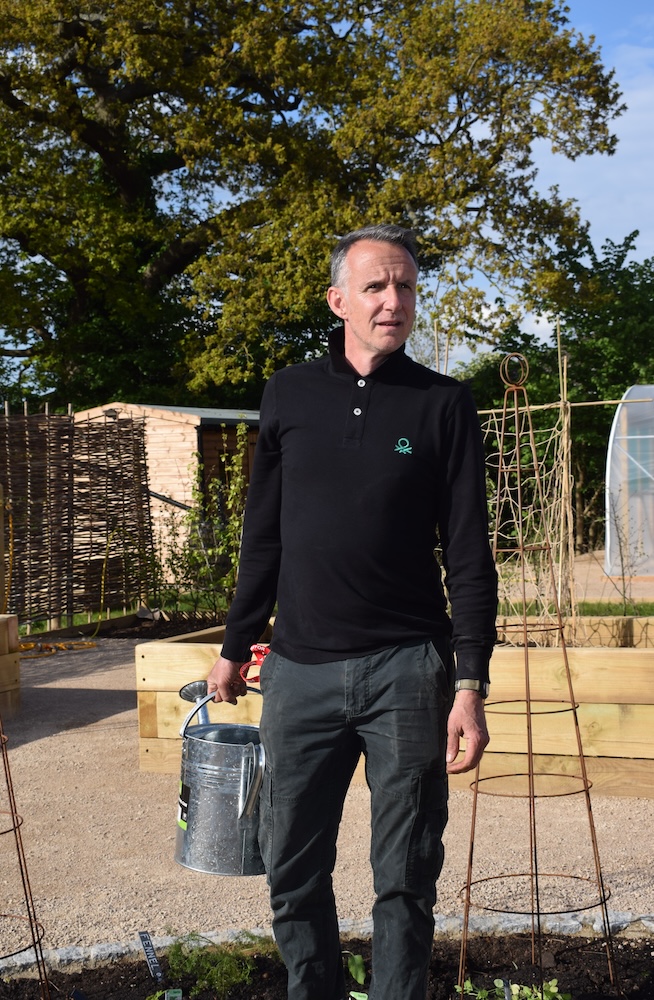
A Garden for Learning and Community
From its very beginning, the garden was designed to be shared. It is used not only by the school but also by groups from local state schools, special educational settings and community organisations. It is a space where everyone can learn, regardless of background, ability or experience.
Teachers bring classes here for science, food education, art, wellbeing sessions and outdoor learning. Children discover how soil works, how plants grow, and how the seasons shape the world around them. They learn patience, care and the quiet delight of harvesting something they nurtured themselves.
Working with Natural Materials
Every material was chosen for honesty, durability and warmth.
Hand-built timber beds create natural structure and a crafted feel.
Willow screen panels soften the boundaries, giving the garden an organic, handmade touch.
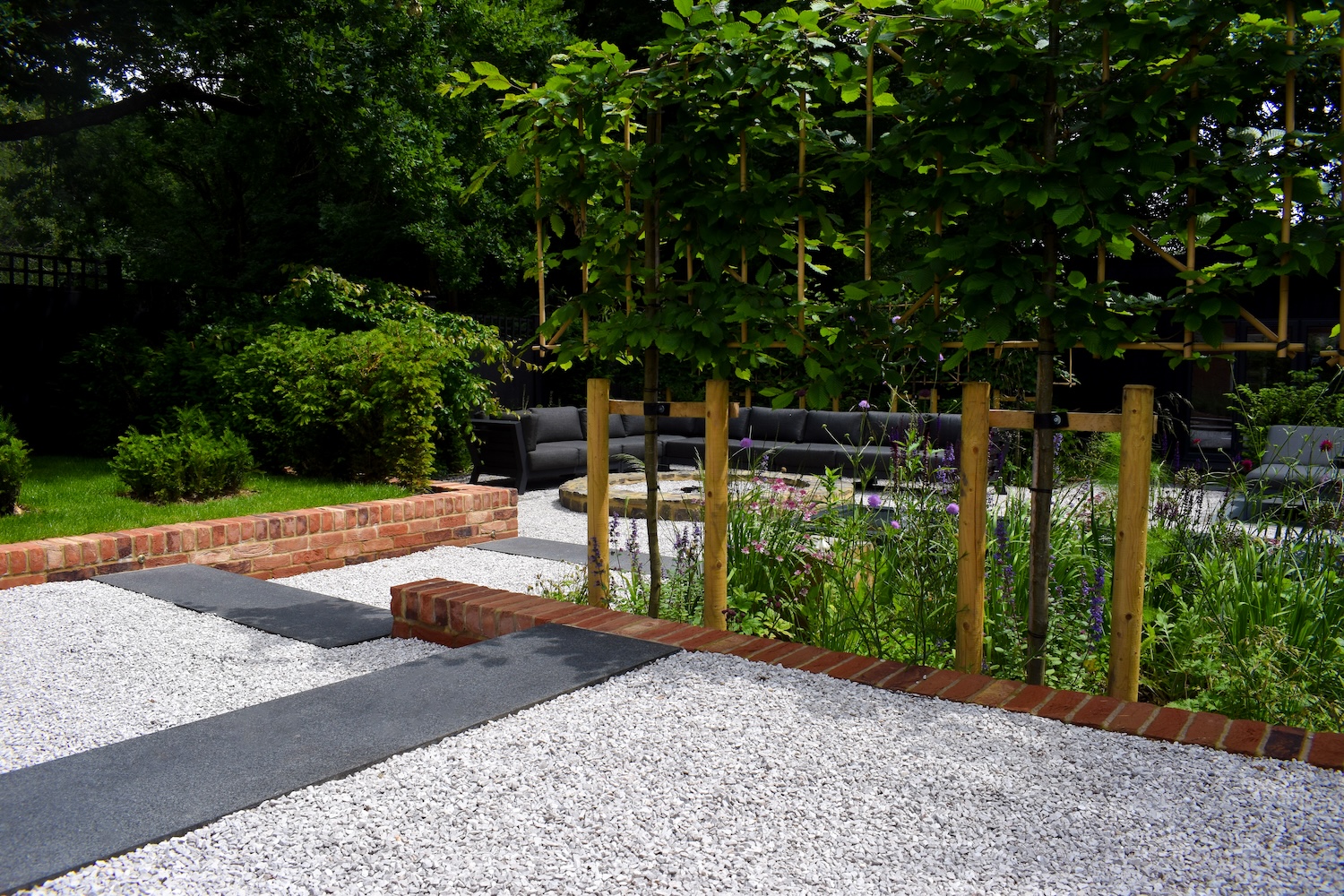
Gravel paths provide good drainage and low-maintenance practicality.
Every detail is intended to be robust, welcoming and easy for the community to care for.
A Space Transformed
Designing and constructing the garden was fascinating, but its true magic arrived the day the gates opened and the children came in to plant it with us. Their enthusiasm filled the space instantly. They are the life of the garden, the spark that no design can ever fully predict.
The result is a food garden that serves an entire community. It grows vegetables, herbs, berries and fruit, but it also grows knowledge, confidence and connection.
It is a place that brings people together, encourages curiosity and nurtures a sense of belonging.
The Importance of Community Gardens in Hertfordshire
Community food gardens are becoming increasingly important across Hertfordshire, where there is a strong commitment to education, sustainability and community wellbeing.
Schools, community centres and new developments are beginning to recognise the value of outdoor spaces that support wildlife, hands-on learning and mental health.
Projects like this show how a well-designed garden can offer far more than produce. It helps people understand where food comes from, encourages biodiversity and strengthens community ties across Hertfordshire and its surrounding towns and villages.
Thinking of Creating a Food Garden?
If you would like to create a food garden or community learning space in Hertfordshire, I would be delighted to help bring your vision to life.
For more information please contact Tim on 07843 487 394
or email: tim@everchangingdesign.co.uk